Bobinsana Calliandra angustifolia Amazonian Traditions and Sustainable Sourcing
Bobinsana is one of those Amazonian plants that draws attention before anyone explains its meaning. Its soft pink, powder-puff flowers stand out along wet riverbanks, while its reputation in Amazonian herbalism reaches into stories of the heart, dreams, songs, and plant apprenticeship.
Known botanically as Bobinsana (Calliandra angustifolia), this shrub belongs to the legume family, Fabaceae. It is part of a much wider web of traditional Amazonian plant knowledge, where plants are understood not only by appearance or preparation, but also by relationship, place, season, and ceremonial context.
This article is informational only. It does not offer medical advice, dosage guidance, or claims that Bobinsana treats or prevents any condition.

Bobinsana’s botanical identity and river habitat
Bobinsana is usually described as a shrubby plant or small tree native to parts of the Amazon basin. It is often associated with river edges, floodplains, and damp soils where seasonal water patterns shape plant life. These riparian habitats matter because they influence how the plant grows, when it flowers, and how local people encounter it.
Its most recognizable feature is its flower. Bobinsana produces delicate, rounded blooms made up of many fine stamens, giving them a soft, brush-like look. The flowers are commonly described as pink to reddish pink, and they contrast sharply with the plant’s green foliage.
The leaves are compound and feathery in appearance, with many small leaflets arranged along a central stem. This gives the plant a light, airy texture despite its woody growth habit.
For botanically minded readers, the name Calliandra angustifolia helps distinguish Bobinsana from other Amazonian plants that may share local names across regions. Local naming can vary, so botanical identity is especially useful when discussing sourcing, research, or preparation.
Bobinsana in Amazonian plant traditions
Bobinsana Amazonian traditions often describe the plant as connected with the emotional life. In some contexts, it is associated with the heart, not strictly as an organ in the biomedical sense, but as a symbolic center of feeling, care, grief, affection, and openness.
These associations belong to cultural and spiritual frameworks. They should not be treated as proven clinical effects. Scientific research on Bobinsana remains limited, and traditional meanings do not automatically translate into medical claims.
Within some Amazonian communities and lineages, Bobinsana may be discussed in relation to:
Emotional awareness
The plant is sometimes described as supporting reflection, softness, or sensitivity in ritual settings.
Dreams
Some traditions connect Bobinsana with vivid dreaming or learning through dreams, especially during periods of plant practice.
Songs and plant rituals
In Amazonian healing traditions, songs, prayers, and guided practices may be as central as the plant itself.
Heart-centered symbolism
The “heart” may refer to relational, emotional, or spiritual experience rather than a biomedical category.
This is where the phrase Bobinsana traditional uses can be helpful, as long as it is understood in context. Traditional use describes cultural knowledge and practice. It does not replace scientific testing, clinical evaluation, or professional care.

What a plant dieta means in context
A plant dieta is a traditional practice found in some Amazonian healing and learning systems. The word often refers to a period of disciplined relationship with a plant, guided by a knowledgeable practitioner or lineage. It may include restrictions around food, social contact, sexual activity, scent, speech, or daily routine.
Practices vary widely between communities, families, healers, and regions. There is no single universal Bobinsana dieta, and it would be inaccurate to present one fixed method as “the” authentic form.
In many traditions, a dieta is not simply “taking an herb.” It can involve:
Preparation under the guidance of an experienced practitioner
Specific ritual rules and social responsibilities
Attention to dreams, songs, and emotional states
A broader relationship with place, community, and lineage
Respectful discussion of dieta means avoiding imitation without context. It also means recognizing that Indigenous knowledge is not a free resource to extract, simplify, or repackage.
Comparing dried leaves, tea, and tinctures
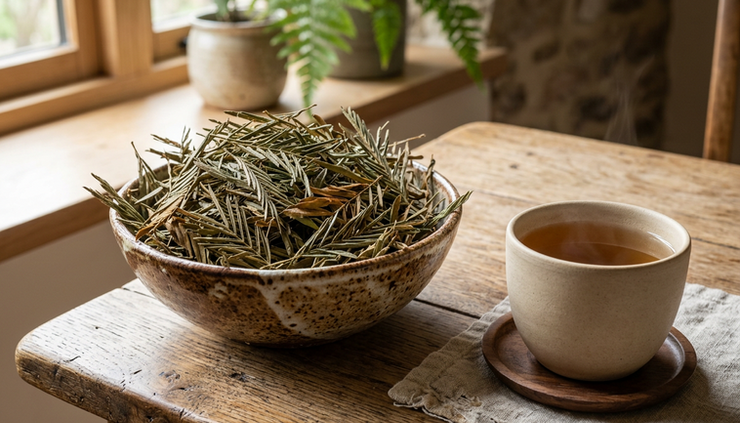
Bobinsana appears in several forms outside its local context, especially as dried leaves, herbal tea, and tincture. Each format offers a different way of engaging with the plant. None should be treated as a guaranteed health intervention.
Form | What it is | Common appeal | Key considerations |
Dried Bobinsana leaves | Loose dried plant material | Flexible for traditional-style herbal preparation | Quality depends on identification, drying, storage, and sourcing |
Bobinsana tea | An infusion or decoction-style preparation made from plant material | Familiar, sensory, and slow-paced | Avoid dosage assumptions, especially without practitioner guidance |
Bobinsana tincture | A liquid extract, often alcohol-based | Convenient and shelf-stable | Strength and preparation methods vary, so labels and sourcing matter |
People interested in Bobinsana tea or a Bobinsana tincture should look beyond the format and ask deeper questions. Was the plant correctly identified? Was it harvested responsibly? Was Indigenous knowledge treated with respect? Was the product described without exaggerated claims?
For readers comparing herbal preparations more broadly, Achula’s collection of herbal tinctures and teas offers a place to explore these formats without needing to treat them as interchangeable.
Ethical sourcing and ecological responsibility
Sustainable botanical sourcing matters with any Amazonian plant. Bobinsana grows in living ecosystems, not in isolation. Riverbank habitats support insects, birds, soil life, fish cycles, and human communities. Careless harvesting can damage more than a single plant population.
Ethical sourcing begins with basic questions:
Plant identity
Is the material truly Calliandra angustifolia?
Harvest method
Were leaves, bark, or other parts collected in a way that allows regrowth?
Ecological pressure
Is demand encouraging overharvest from wild stands?
Community relationships
Are local and Indigenous communities respected and fairly involved?
Knowledge attribution
Are cultural practices described with humility, rather than claimed as a brand story?
Respect for Indigenous knowledge also means avoiding romantic language that treats Amazonian traditions as mysterious, frozen in time, or available for anyone to claim. These knowledge systems are living, diverse, and held by real communities with their own protocols.

FAQs about Bobinsana
Is Bobinsana the same as Calliandra angustifolia?
Yes, Bobinsana is a common name often associated with Calliandra angustifolia. Because common names vary, the botanical name helps clarify which plant is being discussed.
Does science support Bobinsana’s traditional heart associations?
Bobinsana’s heart associations come mainly from traditional and cultural frameworks. They should not be presented as scientifically proven medical effects.
Is a Bobinsana dieta safe to do alone?
A dieta is traditionally guided by experienced practitioners within specific cultural systems. Trying to copy the practice without context, screening, or guidance can be inappropriate and potentially unsafe.
What should ethical buyers look for?
Look for clear plant identification, responsible harvesting, transparent sourcing, and language that respects Indigenous knowledge without making exaggerated claims.
A balanced way to approach Bobinsana
Bobinsana sits at the meeting point of botany, river ecology, Amazonian cultural knowledge, and modern herbal interest. Its flowers and leaves make it botanically distinctive, while its traditional associations with the heart, dreams, and ritual practice give it deep cultural meaning.
The best approach is neither blind belief nor casual dismissal. Bobinsana deserves curiosity, but also care. That means separating traditional belief from scientific evidence, avoiding unsupported health claims, and choosing sources that value ecological responsibility and cultural respect.